How to Choose the Right Outdoor Digital Signage
Outdoor digital communication has become a vital tool for modern businesses. It allows brands to engage with customers in high-traffic environments effectively. Choosing outdoor digital signage involves more than just picking a large screen. You must consider environmental factors that do not affect indoor displays.
These factors include intense sunlight, extreme temperature fluctuations, and moisture. A poorly chosen screen will fail within months under harsh conditions. This guide provides a detailed framework for selecting the best hardware in 2026. We will explore technical specifications that ensure long-term reliability and performance.
Strategic investment in outdoor displays can significantly increase brand visibility. High-quality screens offer vibrant visuals that attract passersby from long distances. However, the wrong choice leads to high maintenance costs and frequent downtime. Understanding the core technology behind these units is the first step toward success.
Why is Brightness the Key Factor in Choosing Outdoor Digital Signage?
Sunlight is the primary challenge for any outdoor visual communication system. Standard indoor screens typically offer a brightness of 300 to 500 nits. This level is insufficient for outdoor environments where ambient light is intense. Choosing outdoor digital signage requires a minimum brightness of 2000 nits for visibility.
In 2026, many premium outdoor displays now reach levels of 3500 to 5000 nits. This high output ensures that content remains readable even in direct midday sun. Contrast ratio also plays a critical role in visual clarity alongside raw brightness. A ratio of 3000:1 or higher is recommended for deep blacks and vivid colors.
You should also look for screens equipped with automatic dimming sensors. These sensors adjust the screen brightness based on the current ambient light levels. They prevent the screen from being too bright at night, which saves energy. Furthermore, auto-dimming extends the overall lifespan of the LED backlight components.
Glare is another significant hurdle for outdoor visibility in urban settings. Most professional outdoor screens use anti-reflective or anti-glare tempered glass. This technology reduces reflections from buildings, cars, and the sun itself. Without this coating, your message might be lost in a sea of reflections.
Essential Features for Choosing Outdoor Digital Signage in 2026
Modern outdoor displays must be built to survive 24/7 operation in public spaces. Durability starts with the external casing of the digital signage unit. Aluminum or galvanized steel enclosures provide the best protection against physical wear and rust. These materials are lightweight yet strong enough to support heavy internal components.
Thermal management is a feature you cannot afford to overlook during your search. High-brightness screens generate significant heat while operating at peak capacity. Efficient cooling systems prevent the liquid crystal from reaching its clearing point. In 2026, most units use either advanced fan cooling or integrated air conditioning.
Connectivity options are also vital for managing content across multiple remote locations. Ensure the hardware supports 4G/5G modules or stable Wi-Fi 6 connections. This allows for real-time updates and hardware monitoring from a central office. Wired Ethernet remains the most reliable option for permanent installations near buildings.
Power efficiency has become a top priority for eco-conscious businesses this year. Look for displays that use high-efficiency power supplies and low-power LED modules. Operating costs can add up quickly when running multiple large-format screens continuously. Energy-star rated components can reduce long-term operational expenses by up to 30%.
| Feature | Standard Requirement | Premium Performance (2026) |
| Brightness | 2000 Nits | 3500+ Nits |
| Operating Temp | -20°C to 50°C | -30°C to 70°C |
| Glass Type | Tempered Glass | AR/AG Bonded Glass |
| Lifespan | 50,000 Hours | 70,000 – 100,000 Hours |
Understanding Weatherproofing Standards and Thermal Management
The IP (Ingress Protection) rating is the industry standard for environmental sealing. When choosing outdoor digital signage, an IP55 or IP65 rating is usually required. IP55 protects against dust and low-pressure water splashes from any direction. IP65 offers a higher level of protection against powerful water jets and total dust ingress.
Waterproofing is not just about keeping rain out of the electronic housing. It also involves managing internal condensation caused by rapid temperature changes. High-quality outdoor displays often include internal heaters for cold morning startups. These heaters prevent moisture from forming on the sensitive internal circuit boards.
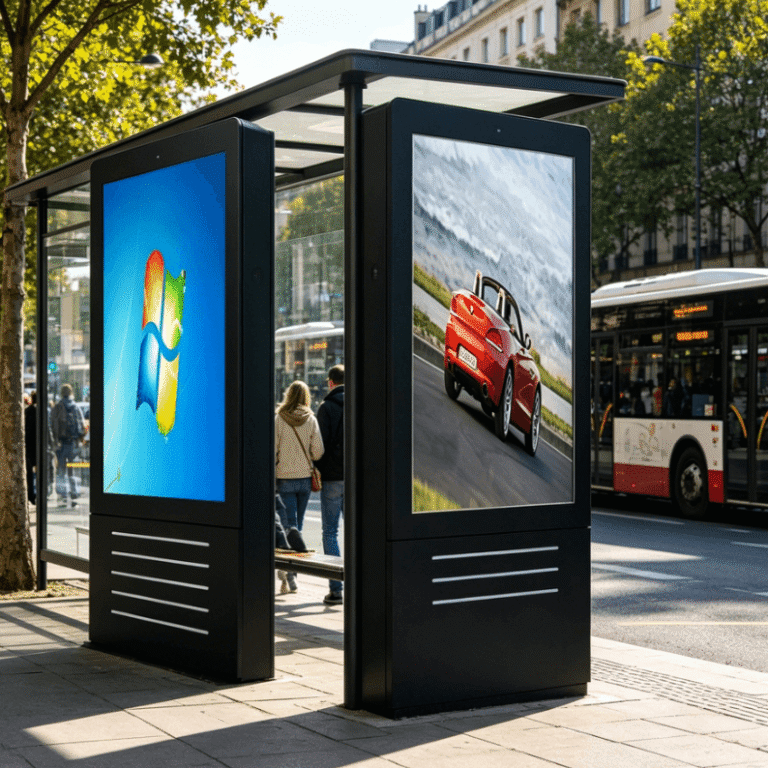
Impact resistance is measured by the IK rating, which ranges from IK01 to IK10. In public areas, an IK10 rating is essential to prevent damage from vandalism. This rating indicates the screen can withstand a 20-joule impact without breaking. Robust glass also protects the display from flying debris during heavy storms.
Effective cooling is what separates professional signage from consumer-grade televisions. Fan-cooled systems are suitable for moderate climates with lower average temperatures. However, fully sealed air-conditioned units are necessary for desert or tropical environments. These systems keep internal temperatures stable regardless of the external weather conditions.
How to Select the Perfect Display Size and Mounting Option?
The size of your outdoor display depends heavily on the intended viewing distance. For pedestrian areas, a 43-inch to 55-inch screen is often the most effective. These sizes allow people walking by to read text clearly at eye level. For highway-facing ads, much larger formats like 75 inches or 86 inches are necessary.
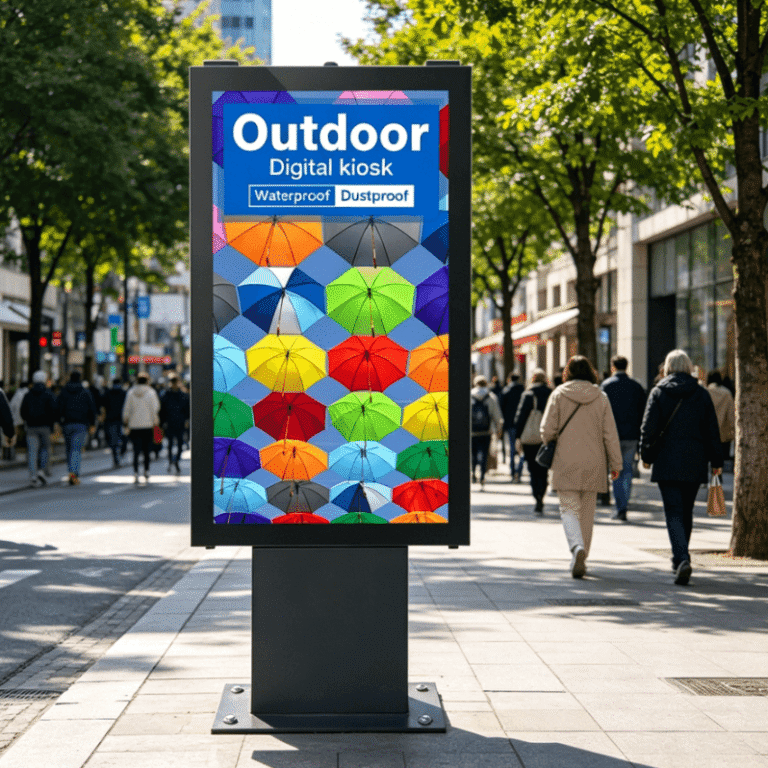
Viewing height also dictates how people will interact with your digital content. Wall-mounted displays are excellent for saving space in narrow corridors or building entrances. Floor-standing kiosks are better for open plazas where 360-degree visibility is preferred. Double-sided kiosks maximize the impact by capturing traffic from two different directions.
Consider the structural requirements of the installation site before making a purchase. Outdoor enclosures are significantly heavier than indoor models due to their rugged construction. Ensure the wall or ground foundation can support the weight and wind load. Professional structural assessments are often required for large-scale outdoor installations in 2026.
Maintenance access is another practical consideration for long-term screen management. Front-access designs allow technicians to repair components without removing the entire unit. This feature is particularly useful for wall-mounted displays in tight spaces. Rear-access is more common for freestanding kiosks located in wide-open areas.
Finding Professional Solutions for Your Outdoor Environment
Selecting the right hardware requires a deep dive into specific product categories. When you explore the available options for outdoor digital signage, you will notice distinct differences in mounting. Floor-standing models often serve as information hubs in smart city initiatives. These units must feature robust bases to handle high wind speeds and foot traffic.
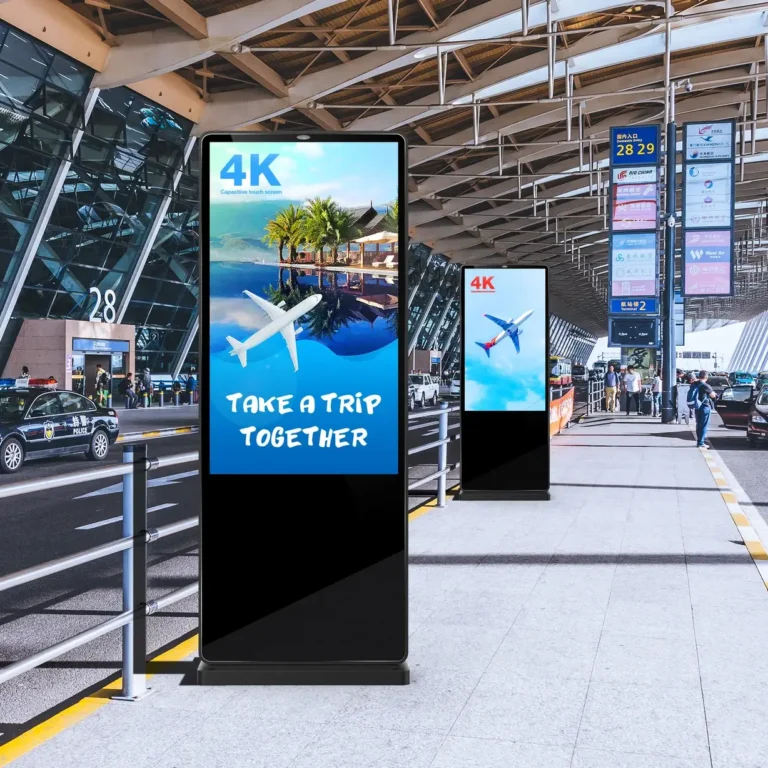
Wall-mounted versions are tailored for businesses with limited floor space but high visibility needs. These displays often use specialized mounting brackets that allow for slight tilting. Tilting can help reduce glare and improve the viewing angle for shorter pedestrians. Choosing between these formats depends on your specific site survey and audience behavior.
Professional-grade displays also offer integrated Content Management Systems (CMS). A reliable CMS allows you to schedule content and monitor screen health remotely. This prevents the need for physical inspections, saving time and labor costs. High-quality suppliers provide these integrated software and hardware packages for a seamless experience.
Look for products that emphasize modular design for easy hardware upgrades. Technology evolves rapidly, and the ability to swap a media player is valuable. This modularity ensures that your enclosure stays relevant even as processing power improves. Ultimately, the best choice is one that balances current performance with future flexibility.
Summary
Choosing outdoor digital signage requires a focus on brightness, weatherproofing, and cooling efficiency. Prioritize high-nit displays and IP65-rated enclosures to ensure durability in 2026 environments. By matching the display size to your audience’s viewing distance, you maximize the effectiveness of your digital communication strategy.
PRO TIP
Always request a thermal simulation report from your supplier before purchasing. This data confirms the screen can handle the specific peak temperatures of your geographical region.
FAQ
1. What is the minimum brightness needed for outdoor screens?
The minimum brightness for any outdoor screen is 2000 nits. This level ensures the content is visible under most daylight conditions without fading. For locations with direct, unshaded sunlight, 3000 to 3500 nits is highly recommended for clarity.
2. Can I use a regular TV outdoors if I put it in a case?
Using a consumer TV outdoors is generally not recommended for long-term use. Regular TVs lack the internal thermal management and high-brightness panels required for outdoor environments. Even in a protective case, heat buildup will likely cause the TV to fail prematurely.
3. How long does outdoor digital signage usually last?
Professional outdoor digital signage typically has a lifespan of 50,000 to 100,000 hours. This equates to about 5 to 10 years of continuous 24/7 operation. Proper maintenance and choosing units with high-quality cooling systems can extend this lifespan significantly.
4. What does an IP65 rating actually mean for a display?
An IP65 rating means the unit is completely dust-tight and protected against water jets. The first digit “6” represents the highest level of dust protection available. The second digit “5” indicates protection against water projected by a nozzle from any direction.
5. Are outdoor displays difficult to maintain?
Maintenance is manageable if you choose a unit with remote monitoring capabilities. These systems alert you to fan failures, temperature spikes, or connectivity issues immediately. Physical cleaning of the glass and checking air filters every six months is usually sufficient.
Reference Sources