2026 Digital Signage for Retail: Tech Trends & Procurement Guide
The retail landscape in 2026 is no longer defined by static screens playing looped videos. As physical stores pivot toward “experience centers,” the hardware driving these environments has become more sophisticated, ruggedized, and intelligent. For project managers and retail architects, selecting the right digital signage for retail now requires a deep understanding of thermal management, ambient light compensation, and data-integrated content delivery.
High-Brightness Window Displays: Dominating the Storefront
In 2026, the battle for consumer attention begins at the sidewalk. Standard commercial displays often fail in storefront applications due to “isotropic blackout”—a phenomenon where the liquid crystals in a screen overheat and turn black under direct sunlight.
Modern high-brightness window displays have solved this through advanced cooling systems and high-TNI (Twisted Nematic Impervious) panels. These units typically offer brightness levels between 2,500 and 4,000 nits. This ensures visibility even in high-glare environments where traditional screens would appear washed out.
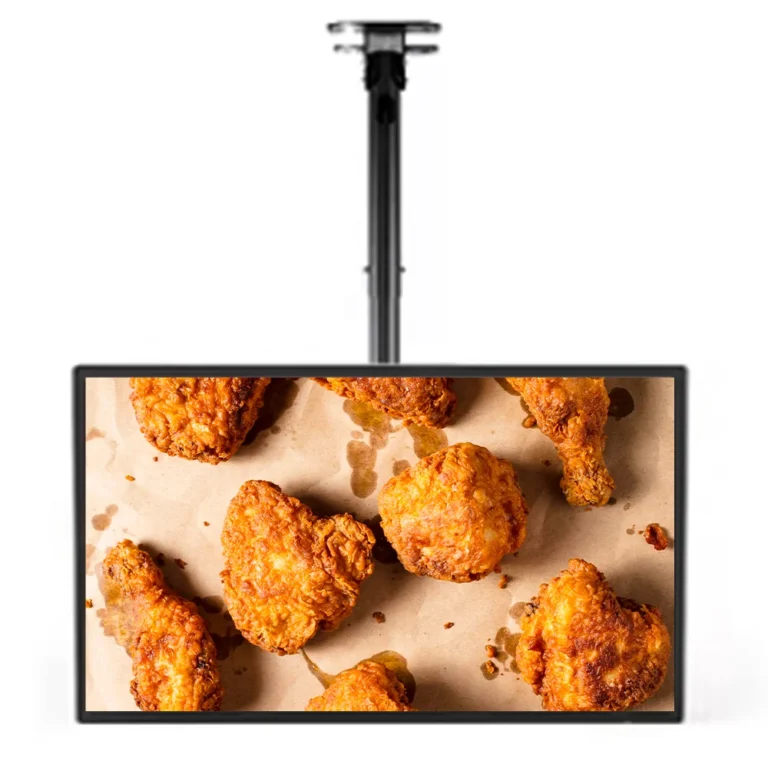
Technical Comparison: Standard vs. Professional Retail Displays
| Feature | Standard Commercial Display | High-Brightness Retail Display |
| Brightness | 350 – 700 Nits | 2,500 – 4,500 Nits |
| Operating Temp | 0°C to 40°C | -20°C to 80°C (High TNI) |
| Cooling | Passive Venting | Advanced Heat Sinks / Internal Fans |
| Visibility | Poor in sunlight | Perfect in direct sunlight |
The Rise of “Phygital” with Transparent & 3D Holographic LCDs
Retailers are increasingly seeking ways to merge physical products with digital storytelling. Holographic 3D transparent LCD displays represent the pinnacle of this “phygital” trend.
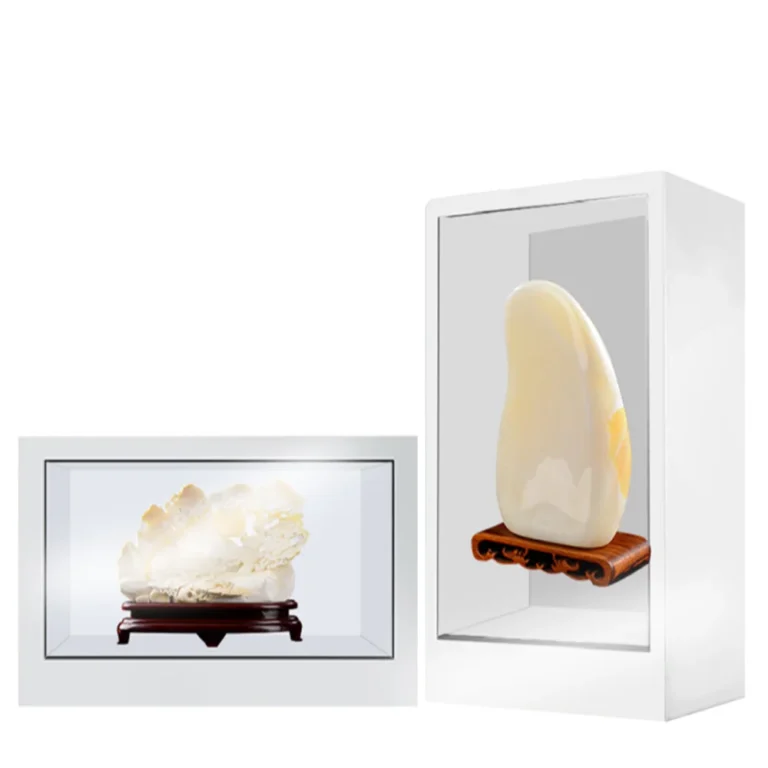
These displays allow customers to see the actual product behind the glass while digital graphics, specs, or promotional animations “float” in front of it. In 2026, the focus has shifted toward higher transparency ratios (exceeding 15-20%) and 4K resolution. This tech is particularly effective for luxury watches, jewelry, and high-end electronics where the tactile presence of the product is vital, but the digital layer provides the “wow” factor.
Ruggedized Outdoor Signage for Urban Retail
The “storefront” has expanded beyond the front door. Curbside pickup zones and outdoor kiosks have become permanent fixtures in the retail ecosystem. This shift has accelerated the demand for outdoor digital signage that can withstand 24/7 environmental stress.
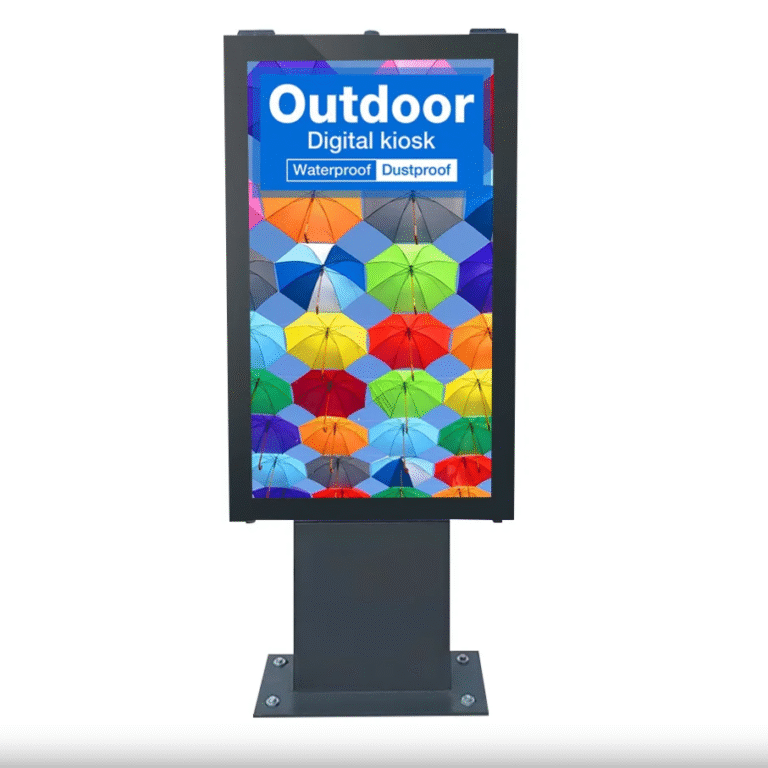
Engineering considerations for 2026 outdoor retail units include:
IP65/IP66 Protection: Ensuring the internal electronics are sealed against dust, rain, and humidity.
Impact Resistance: Using IK10-rated tempered glass to protect against vandalism in high-traffic urban areas.
Anti-Reflection (AR) Coatings: Reducing mirror-like reflections to maintain content legibility at various viewing angles.
AI-Integrated Contextual Content Delivery
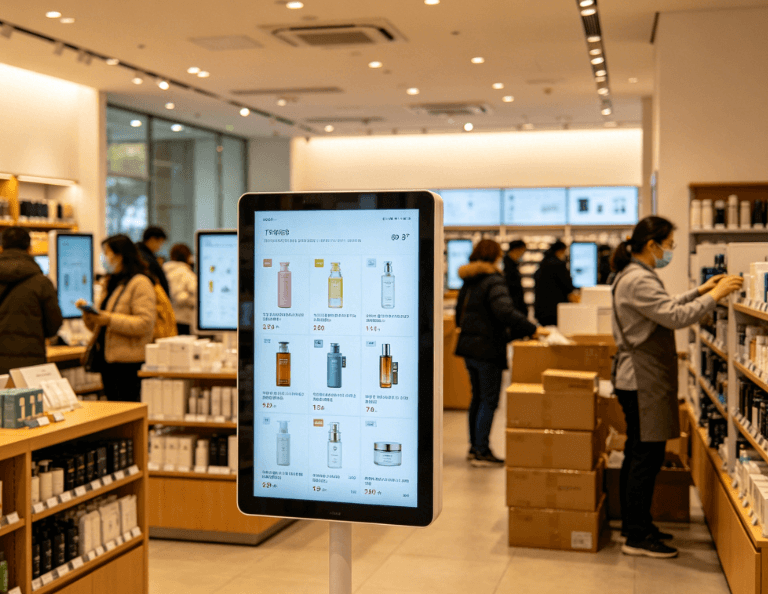
Digital signage for retail is no longer a “set it and forget it” medium. In 2026, AI sensors integrated into the bezel or chassis of the display allow for real-time content adjustment.
By using anonymous computer vision, a display can detect the approximate age, gender, and even the “dwell time” of a viewer. If a customer stands in front of a footwear display for more than five seconds, the AI can trigger a call-to-action (CTA) featuring the specific model the customer is looking at, or even show current stock levels pulled from the store’s ERP system.
Sustainability and Energy Management
As global regulations on energy consumption tighten, 2026 hardware must prioritize efficiency. Manufacturers are now utilizing:
Ambient Light Sensors: These automatically dim the screen at night or on cloudy days, extending the lifespan of the LED backlight and reducing electricity costs.
Smart Power Scheduling: Integrating with building management systems to ensure screens are only active during peak operational hours.
Recyclable Materials: Moving toward aluminum alloy casings rather than traditional plastics to improve heat dissipation and end-of-life recyclability.
Critical Hardware Selection Criteria for B2B Buyers
When evaluating a supplier or OEM for a large-scale retail rollout, technical specifications must take precedence over price. A lower initial CAPEX often leads to higher OPEX due to maintenance and early failure.
Key Evaluation Checklist:
Nit Rating: Is it sufficient for the specific light environment (Indoor vs. Window vs. Outdoor)?
Duty Cycle: Is the panel rated for 24/7 operation or 16/7?
Connectivity: Does it support SoC (System on Chip) or does it require an external media player?
Thermal Management: How does the unit handle 10 hours of direct UV exposure?
CMS Compatibility: Is the hardware “agnostic,” allowing you to use your preferred content management software?
Future-Proofing Retail Infrastructure
The core of a successful 2026 retail digital signage strategy lies in scalability. By investing in high-quality hardware—such as high-TNI panels and ruggedized outdoor enclosures—retailers protect their investment against the harsh realities of public environments. As AI and interactivity become standard, the “skeleton” of the system (the display itself) must be robust enough to support these software-driven innovations for a 5-to-7-year lifecycle.
FAQ
1.What is the difference between a high-brightness display and a standard TV?
Standard TVs usually offer 250–350 nits and are designed for controlled indoor lighting. High-brightness retail displays offer 2,500+ nits and include industrial-grade cooling to prevent “blackout” when exposed to sun-induced heat.
2.Can transparent LCDs be used in any lighting condition?
Transparent LCDs require a backlight source, usually integrated into a showcase box. They perform best in controlled indoor environments where the internal lighting can be optimized to showcase the physical product behind the screen.
3. What is the lifespan of an outdoor digital signage unit in 2026?
Professional-grade outdoor units are typically rated for 50,000 to 70,000 hours of use. With proper maintenance of the cooling filters and seals, these units can last 7+ years in most climates.
4.Does digital signage for retail require specialized software?
Yes, most commercial projects utilize a Content Management System (CMS). However, many modern displays come with “System on Chip” (SoC) technology, allowing the software to run directly on the hardware without an external PC.
Reference Sources