Outdoor Digital Signage: Key Features
The landscape of visual communication is changing rapidly as we move through 2026. Modern businesses now use outdoor digital signage to engage audiences in every environment. These displays must overcome significant challenges to remain effective and visible.
Standard indoor screens cannot survive the harsh conditions of the outside world. They often fail due to heat, moisture, or insufficient brightness levels. High-quality outdoor digital signage requires a specific set of ruggedized features.
Selecting the right hardware ensures that your message reaches potential customers clearly. It also protects your long-term investment from environmental damage or technical obsolescence. Effective outdoor displays must balance visual brilliance with extreme structural durability.
Why Is High Brightness Vital for Outdoor Digital Signage?
Sunlight is the primary enemy of any external screen visibility. Standard office displays typically offer around 300 to 500 nits of brightness. Outdoor digital signage must provide at least 2,500 nits to combat direct solar glare.
In 2026, premium displays often reach brightness levels of 3,500 to 5,000 nits. This extreme luminance ensures that text remains legible even at high noon. High nit levels allow colors to remain vibrant under the brightest sky.
Visual clarity also depends heavily on the contrast ratio of the panel. A high contrast ratio of 5,000:1 helps define images against the background. Superior contrast prevents the screen from looking washed out or grayed.
How Does Ambient Light Sensing Improve Performance?
Consistent high brightness can lead to excessive power consumption and light pollution. Modern units include integrated light sensors that monitor the surrounding environment. Automatic dimming technology adjusts the screen brightness based on the time of day.
During the night, the display lowers its output to a comfortable level. This prevents blinding pedestrians while significantly reducing electricity costs for the owner. Smart light management can extend the lifespan of the LED backlight components.
Environmental sensors also help maintain the visual balance of the display. They ensure that the screen is never too dim during overcast weather. Intelligent brightness control provides a consistent viewing experience in any weather condition.
The Role of Optical Bonding in Sunlight Readability
Optical bonding is a specialized manufacturing process that eliminates internal air gaps. It involves applying a layer of resin between the glass and the panel. Optical bonding reduces internal reflections by up to 90 percent for better clarity.
This process also improves the physical durability of the entire display assembly. It prevents moisture and dust from entering the space behind the cover glass. Bonded screens offer higher contrast and better impact resistance than standard units.
In the year 2026, this technology has become standard for high-end installations. It allows users to see deep blacks and rich colors without distracting reflections. Enhanced optical performance is essential for displays located in open, sunny plazas.
How Does Weatherproofing Protect Your Digital Investment?
External displays face constant exposure to rain, snow, and fine dust particles. The internal electronics are highly sensitive to these contaminants and require shielding. Outdoor digital signage must adhere to strict Ingress Protection (IP) standards.
An IP65 rating is the minimum requirement for most professional outdoor installations. This rating ensures the unit is dust-tight and resistant to low-pressure water. IP66-rated enclosures provide even better protection against powerful water jets and storms.
Sealing technology involves high-grade gaskets and precision-engineered metal housings. These components work together to create a hermetic barrier for the electronics. Reliable weatherproofing prevents short circuits and internal corrosion over many years.
Understanding Thermal Management Systems
Extreme temperatures can cause electronic components to fail or lose performance. Outdoor digital signage must operate in climates ranging from -30°C to +50°C. Sophisticated climate control systems maintain a stable internal temperature for the hardware.
High-speed fans or integrated air conditioning units are often used for cooling. These systems move heat away from the sensitive LED or LCD panels. Efficient thermal management prevents “blacking out” of the screen in high heat.
In colder regions, internal heaters prevent the electronics from freezing during winter. These heaters activate automatically when sensors detect a drop in temperature. Stable internal environments ensure the display starts up reliably every single morning.
Protection Against Vandalism and Physical Impact
Public displays are often located in high-traffic areas where accidents can happen. Vandalism and accidental impacts are significant risks for any street-level installation. Using IK10-rated glass provides the highest level of protection against physical damage.
This specialized tempered glass can withstand a 20-joule impact without breaking. It is usually 5mm to 10mm thick and chemically strengthened for extra durability. Rugged glass layers protect the expensive liquid crystal panel from external force.
Steel or aluminum enclosures provide a secondary layer of structural defense. These housings are designed to resist tampering and unauthorized access to the ports. Vandal-resistant designs keep the internal media player and cables safe.
Key Features of Industrial Grade Hardware Components
The internal parts of an outdoor unit differ greatly from consumer electronics. They are designed for 24/7 operation under heavy thermal and electrical loads. Industrial-grade components provide the reliability needed for professional advertising and information.
Capacitors and power supplies must be rated for long-term continuous use. Standard components might fail within months if left running 24 hours a day. Heavy-duty power systems ensure stable voltage delivery to the entire display.
Remote monitoring software allows technicians to check the system’s health from anywhere. They can track internal humidity, temperature, and current power usage in real-time. Proactive monitoring prevents minor issues from turning into expensive hardware failures.
The Importance of High-Definition and 4K Resolution
As viewers become accustomed to high-quality screens, resolution becomes a competitive advantage. Most modern outdoor displays now offer at least 1080p Full HD resolution. 4K Ultra HD is increasingly common for kiosks where viewers stand nearby.
Clear text and sharp images are vital for reading maps or menus. High pixel density ensures that fine details are visible from a short distance. Premium resolution enhances the professional image of the brand being displayed.
Modern media players can handle high-bitrate video without lagging or stuttering. This ensures that transitions between advertisements are smooth and visually appealing. Fluid motion graphics capture more attention from passersby than static images.
Connectivity and Remote Content Management
Updating content manually is not practical for a network of outdoor screens. Outdoor digital signage units typically feature multiple connectivity options for remote updates. Wi-Fi, Ethernet, and 4G/5G modules allow for instant content synchronization.
Cloud-based Content Management Systems (CMS) give users total control over their displays. They can schedule different messages for different times of the day easily. Centralized management reduces the cost of operating large digital signage networks.
Integrated System on a Chip (SoC) technology simplifies the internal hardware setup. By including the media player inside the display, there are fewer cables. SoC solutions improve system reliability by reducing the number of failure points.
How to Select the Ideal Outdoor Display Solution?
Choosing the right hardware depends on your specific environmental and business needs. You should begin by evaluating the typical light levels at your location. High-traffic areas with direct sun require the most powerful brightness specifications.
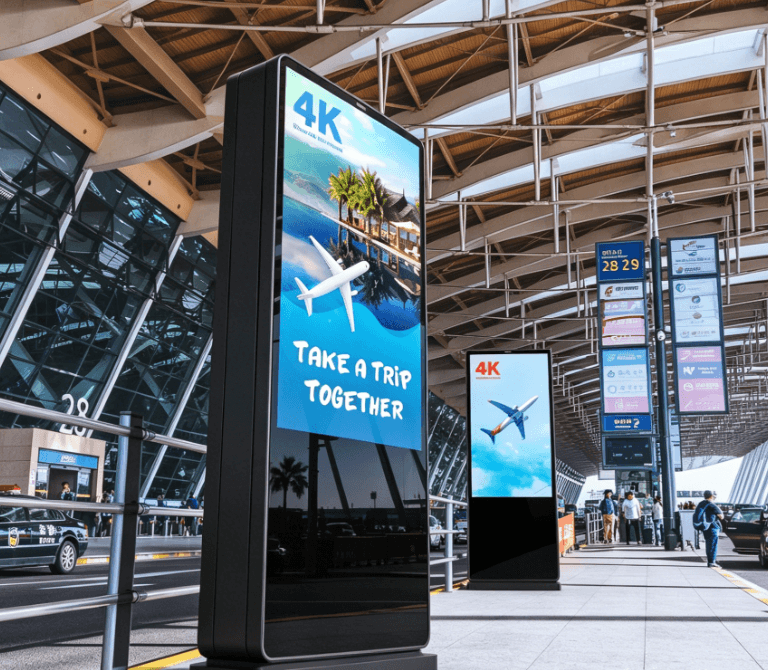
Consider the mounting requirements for your specific site or building structure. Some locations may require slim, wall-mounted units for narrow sidewalks or alleys. Freestanding kiosks are better suited for open squares or transit hubs.
It is also important to look at the long-term maintenance costs. Displays with easy-access filters and front-serviceable panels save time and money. Evaluating the serviceability of a unit is a key part of selection.
When searching for high-quality hardware, businesses often browse specialized outdoor digital signage categories to find certified equipment. These product lines are engineered to meet the demands of 2026 urban environments. Choosing a reputable manufacturer ensures that your display includes all necessary safety features.
Check the warranty terms to ensure your investment is protected against defects. A strong warranty often indicates the manufacturer’s confidence in their product’s durability. Reliable support services are essential for maintaining 100 percent uptime for your signage.
Summary
Outdoor digital signage requires a specific combination of high brightness and rugged protection. By focusing on IP65 ratings, IK10 glass, and thermal management, you ensure longevity. These features allow businesses to communicate effectively in any weather condition throughout 2026. Investing in high-quality hardware leads to better visibility and higher long-term returns.
PRO TIP
Before installing your screen, always verify the local power stability of the site. In 2026, even the best displays can be damaged by sudden electrical surges or spikes. Installing an industrial-grade surge protector alongside your signage can prevent permanent damage to the internal electronics and panel.
FAQ
1. What is the minimum brightness for outdoor digital signage?
The minimum brightness should typically be at least 2,500 nits for daylight visibility. In locations with direct, harsh sunlight, 3,000 to 3,500 nits is usually required for clarity. This ensures that the content does not look faded or invisible to passersby.
2. Can these screens operate in extreme winter conditions?
Yes, professional outdoor displays are designed to work in temperatures as low as -30°C. They use internal heating elements to keep the components within a safe operating range. This prevents the liquid crystals from freezing and ensures a reliable cold-start.
3. What does an IP65 rating actually mean for a display?
An IP65 rating means the display is completely protected against dust ingress. It also means the unit can withstand low-pressure water jets from any direction. This makes it safe for use in heavy rain and dusty environments.
4. How do I update the content on an outdoor display?
Most modern units are updated remotely via a cloud-based Content Management System (CMS). You can connect to the screen using Wi-Fi, Ethernet, or a 4G/5G cellular network. This allows you to change advertisements or information from your office instantly.
5. Is 4K resolution necessary for all outdoor signs?
Resolution depends on how far away the typical viewer will be standing. For interactive kiosks where people are close, 4K is highly recommended for sharp text. For large billboards viewed from a distance, 1080p is usually more than enough.
Reference Sources
AVIXA Standards for Digital Signage