Why choose battery-powered over corded signage?
Marketing professionals often find the perfect advertising spot only to realize there is no power outlet nearby. I have seen many high-traffic locations wasted because traditional displays required long, dangerous extension cords. This is precisely why choose battery-powered over corded signage has become a critical question for modern retailers. The core advantage of battery-powered signage is the absolute freedom to place your message exactly where customers walk, without creating trip hazards. In the first few minutes of reading this, you will understand how removing the “cord” can significantly increase your foot traffic and sales.
Freedom of Placement and Marketing Mobility
Traditional digital signs are tethered to the nearest wall outlet. This often forces you to place your advertisements in corners rather than in the center of the action. When you ask why choose battery-powered over corded signage, the answer starts with strategic placement. Battery-powered displays allow you to position your content in high-conversion “hot zones” like sidewalk centers or event entryways.
Capturing the “First Impression”
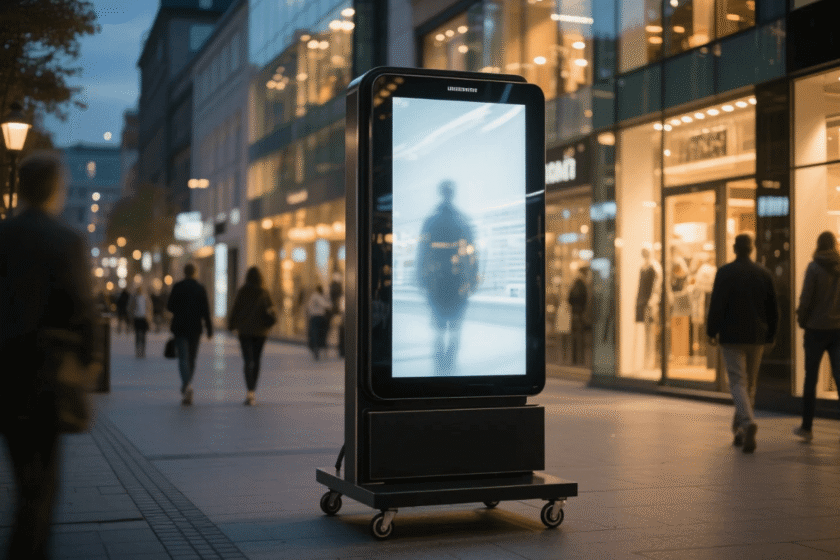
A battery-operated sign can sit directly in the path of a potential customer. This forces engagement in a way that wall-mounted screens cannot. I have found that moving a sign just five feet closer to the sidewalk can double its engagement rate.
Agility for Pop-Up Events
Events and exhibitions often have restricted access to electrical grids. Battery-powered units eliminate the need for expensive “power drops” from event organizers. Total mobility ensures your brand remains visible even in temporary or outdoor venues where power is unavailable.
Public Safety and Compliance Standards
Safety is often overlooked until an accident happens. Cords stretched across a floor are significant liabilities in any commercial environment. According to the Occupational Safety and Health Administration (OSHA), trip-and-fall incidents are a leading cause of public injury claims. By choosing battery-powered signage, you remove the legal risk associated with cable-related tripping hazards in crowded spaces.
Adhering to OSHA Guidelines
OSHA regulations demand that walkways remain clear of obstructions and cords. Corded signage requires heavy-duty cable protectors which are both ugly and difficult to clean. Battery units meet these safety requirements by being completely self-contained.
Electrical Safety in Outdoor Settings
Rain and moisture create additional risks for corded outdoor displays. Battery-powered systems are designed with high Ingress Protection (IP) ratings to prevent electrical shorts. Removing high-voltage cables from outdoor environments ensures a safer experience for pedestrians and staff during wet weather.

Operational Efficiency and Cost Savings
Many business owners only look at the initial price of a digital sign. However, corded signage often carries hidden installation costs. You may need to hire a licensed electrician to install new outlets or dig trenches for underground wiring. The total cost of ownership for battery-powered signage is often lower because it requires zero professional installation labor.
Eliminating Professional Installation
A battery sign is ready to use the moment it arrives. You do not need to wait for permits or electrical contractors to start your campaign. This “plug-and-play” nature allows for immediate deployment of seasonal promotions.
Reducing Maintenance Complexity
Corded displays are susceptible to power surges and damaged wiring. Battery units use DC power, which is inherently more stable for sensitive LED and LCD components. Modern lithium-ion batteries provide long-lasting performance with minimal maintenance compared to complex wired systems.
Battery Technology and Environmental Impact
A common concern is whether batteries can last a full business day. Modern battery management systems have evolved significantly over the last few years. High-capacity lithium batteries can now power a high-brightness screen for 12 to 14 hours on a single charge. Advanced energy-efficient LED panels ensure that battery units can run a full shift without losing screen brightness.
Sustained High Brightness
Early battery signs were dim to save energy. Today, they compete directly with corded units in terms of “nits” or brightness levels. This is vital for outdoor visibility where the display must outshine direct sunlight.
Sustainable Energy Use
Charging a battery during off-peak hours can be more energy-efficient for some venues. Furthermore, many battery-powered posters are compatible with solar-assist charging. Investing in battery-powered technology supports a more agile and energy-conscious marketing infrastructure.
How to decide if battery power is right for your venue?
Choosing between power sources depends on your specific environment and how often you move your displays. If your sign will stay in the same spot for five years, corded power might be sufficient. However, if you value the ability to follow the “flow” of your customers, battery power is the clear winner. The decision should be based on your need for agility and the availability of safe power outlets in your target areas.
When evaluating options, look for units with weatherproofing and high-capacity cells. You can view technical specifications for a weatherproof portable outdoor battery-powered advertising poster on our product page. This model balances brightness with battery longevity for professional outdoor use. Selecting a display with easy-roll wheels and long-lasting lithium cells ensures your marketing team can move the sign effortlessly every morning.
Conclusion
In conclusion, the reason why choose battery-powered over corded signage is clear: mobility, safety, and cost. Removing cables allows you to place your ads in the most profitable locations while eliminating trip hazards and installation fees. Battery-powered digital signage provides the ultimate flexibility needed to thrive in today’s competitive and fast-moving retail landscapes.

FAQ
1. How long does a battery-powered sign typically last on one charge?
Most professional models provide between 10 and 14 hours of continuous runtime at full brightness. This is specifically designed to cover a standard retail shift or event day. Some units also offer “swappable” batteries to allow for 24/7 operation without downtime.
2. Is the brightness of battery-powered signage lower than corded units?
No, modern battery-powered displays can reach up to 1,500 to 2,500 nits. This level of brightness is sufficient for outdoor visibility in direct sunlight. Advanced LED backlight technology ensures the screen remains vibrant until the battery is nearly depleted.
3. Are battery-powered signs safe to leave outdoors in the rain?
Professional battery signs are rated with an IP65 or IP66 ingress protection level. This means they are protected against rain, dust, and water jets. Always verify the IP rating of the hardware to ensure it can withstand your local weather conditions.
4. How long do the internal batteries last before they need replacement?
High-quality lithium-ion batteries used in these signs are typically rated for 1,000 to 2,000 charge cycles. For most businesses, this equates to roughly 3 to 5 years of daily use. Most manufacturers design the battery compartments to be easily accessible for replacement when the cells eventually age.
5. Why choose battery-powered over corded signage for indoor retail?
Even indoors, cords are a liability and an eyesore. Battery signage allows you to place a screen in the middle of a department store aisle without taping down cables. A cleaner aesthetic and reduced trip liability make battery power a superior choice for high-end boutique environments.
Reference Sources