What Makes a Fast Food Restaurant Kiosk Essential?
In my fifteen years consulting for the quick-service restaurant (QSR) industry, I have watched the landscape shift from manual labor to digital precision. Today, restaurant owners face a perfect storm of rising labor costs and increasing consumer demands for speed. Utilizing a fast food restaurant kiosk is no longer a luxury reserved for global giants like McDonald’s. It has become the backbone of modern operational resilience. These devices bridge the gap between back-of-house efficiency and front-of-house hospitality. This guide explores the technical and functional reasons why this technology is a non-negotiable asset for your business. Adopting a fast food restaurant kiosk is the most effective way to stabilize order accuracy and maximize throughput during peak hours.
Enhancing Operational Efficiency and Order Accuracy
Operational friction often stems from communication breakdowns between the customer and the kitchen staff. A fast food restaurant kiosk serves as a specialized interface that eliminates verbal misunderstandings. In a high-volume environment, even a 2% error rate can lead to massive waste and lost loyalty.
Reducing Order Errors with Visual Menu Interfaces
Visual menus allow customers to see exactly what they are ordering, including modifiers and allergens. According to ISO 9241-210 standards for human-system interaction, visual feedback is critical for reducing cognitive errors. The precise input method of a fast food restaurant kiosk ensures that the kitchen receives the exact specifications for every meal. This transparency builds a higher level of trust with the diner.
Mitigating Labor Shortages and High Turnover Costs
The restaurant industry consistently struggles with labor retention and training overhead. A fast food restaurant kiosk can handle the workload of two to three full-time cashiers. This allows you to reallocate your human staff to more critical areas like food preparation or table cleaning. By automating the transaction phase, you reduce the impact of local labor market fluctuations on your daily operations.
Optimizing the Customer Experience and Revenue per Transaction
Modern diners, especially younger demographics, prefer self-directed experiences over forced social interactions for routine tasks. Beyond simple convenience, the fast food restaurant kiosk is a powerful psychological tool for increasing spend.
Personalized Upselling through Intelligent Software
Human cashiers often forget to suggest side items or drink upgrades during a busy shift. Kiosks never forget to offer a “large” meal or a dessert add-on. Industry data from the National Restaurant Association suggests that self-service terminals can increase average check sizes by 15% to 30%. A well-configured fast food restaurant kiosk uses data-driven prompts to maximize the revenue generated from every foot traffic visitor.
Reducing Perceived and Actual Wait Times
Queue management is a primary psychological factor in customer satisfaction. When diners see a long line at the counter, they may leave for a competitor. Strategic placement of a fast food restaurant kiosk breaks up physical queues and provides an immediate point of engagement. This reduces the “wait-to-order” time, which is the most frustrating part of the fast-food journey.
Industrial Hardware Standards for High-Traffic Environments
An essential kiosk must be built to survive the rigors of a commercial kitchen environment. Standard tablets or consumer-grade monitors will fail under the stress of 24/7 public use. You must prioritize industrial-grade components to ensure long-term ROI.
Durable Enclosures and High-Brightness Displays
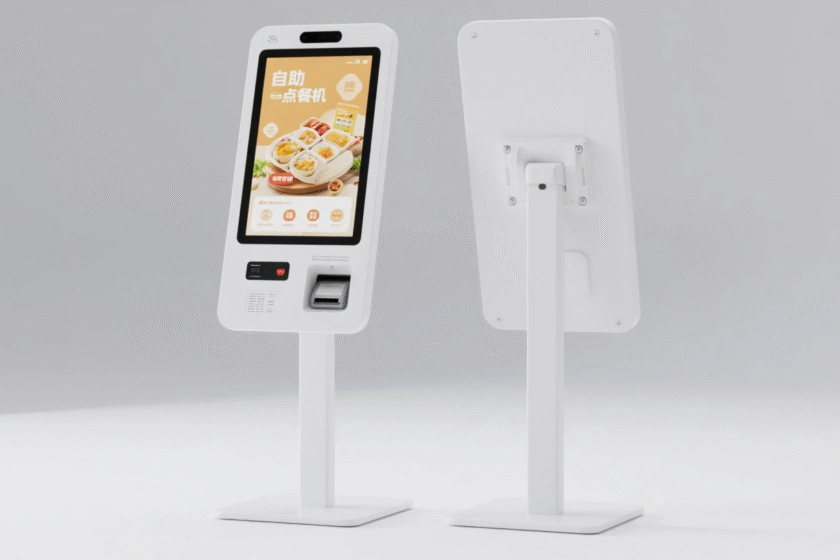
The physical housing must be resistant to physical impact and frequent chemical cleaning. I recommend looking for enclosures made of cold-rolled steel with anti-fingerprint coatings. A high-quality fast food restaurant kiosk utilizes a high-brightness panel to remain legible under harsh overhead lighting. These panels are designed for continuous operation without the “burn-in” issues common in cheap hardware.
Seamless Payment Integration and Cybersecurity
Handling financial transactions requires hardware that complies with global security frameworks. Every fast food restaurant kiosk should support PCI-DSS compliant credit card readers and encrypted QR scanners. Following NIST guidelines for device security prevents unauthorized access to your store’s network. Choosing hardware with integrated security modules is the only way to protect your business and your customers from data breaches.
Selecting the Right Kiosk Infrastructure for Chain Growth
Knowing how to determine the suitability of a kiosk depends on your specific floor plan and volume expectations. If you are managing a large-scale chain, you need hardware that offers high modularity and ease of maintenance. You must judge the “judgment standard” of the hardware by its ability to integrate with your existing Point of Sale (POS) system.
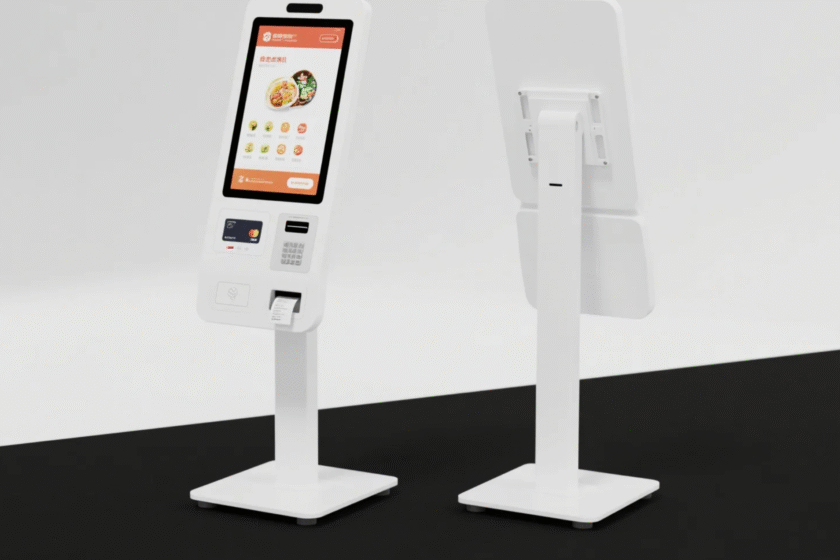
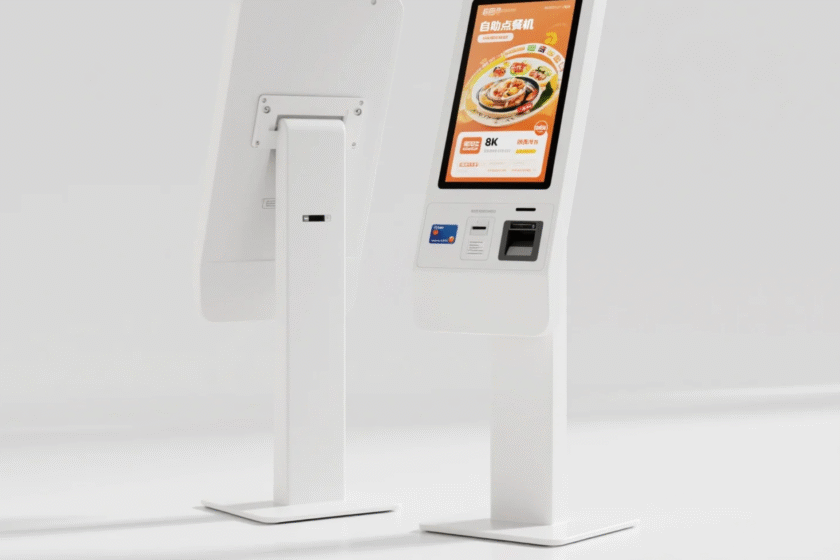
For chain managers looking for a robust, high-traffic solution, exploring the Double-column model touchscreen floor-standing self-ordering kiosk is essential. This specific model is engineered for the fast-paced environment of food chains, featuring an integrated QR scanner and a durable POS bracket. The right hardware choice acts as a long-term anchor for your digital transformation, ensuring your brand remains competitive in an automated world.
When evaluating suppliers, look for those who provide localized technical support and remote diagnostic capabilities. A kiosk that stays offline for a day is a direct loss of revenue. Investing in a professional all-in-one terminal ensures that your self-service technology remains stable, secure, and engaging for the long term.
Conclusion
The primary conclusion is that a fast food restaurant kiosk is essential for stabilizing labor costs, reducing order errors, and significantly increasing average transaction value. To maximize your return on investment, you must prioritize industrial-grade hardware that meets ISO standards and offers seamless integration with secure payment protocols. By focusing on these functional pillars, you create a resilient dining environment that meets the high-speed expectations of modern consumers.
FAQ
1. Does a fast food restaurant kiosk replace human staff?
No, it reallocates them. Instead of standing behind a register, staff can focus on food quality and customer hospitality. A fast food restaurant kiosk empowers your team to work on higher-value tasks that improve the overall brand experience.
2. Are these kiosks hard for elderly customers to use?
Modern interfaces are designed following ergonomic and accessibility standards. They use large buttons and clear instructions. Adhering to ISO accessibility guidelines ensures that your fast food restaurant kiosk is intuitive for diners of all ages.
3. How do I maintain hygiene on a public touchscreen?
You should use a soft microfiber cloth and a mild non-abrasive cleaning agent. Many kiosks now come with antimicrobial glass treatments. Regular cleaning of the fast food restaurant kiosk surface is vital for maintaining customer trust and safety.
4. What happens if the internet goes out?
Professional kiosks often have an “offline mode” that caches menu data. However, credit card processing usually requires a connection. Choosing a kiosk with redundant network options (Wi-Fi and Ethernet) is a critical safety standard for high-volume stores.
5. Can I customize the software for my specific menu?
Yes, most kiosks run on Windows or Android, allowing for high customization. You can update seasonal items and prices instantly from a central office. Software flexibility is a key feature of an effective fast food restaurant kiosk system.
Reference Sources
National Restaurant Association — Technology Trends in the Food Industry