Is a Touch Screen Gaming Table the Future of Signage?
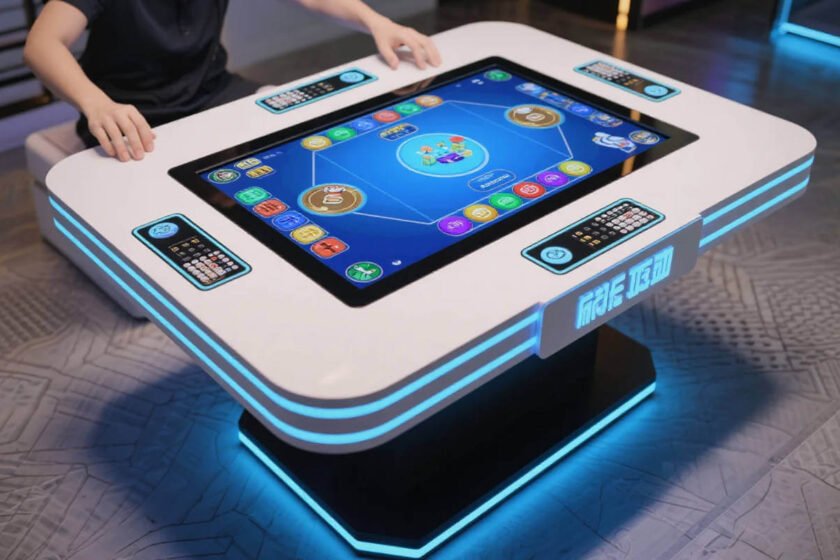
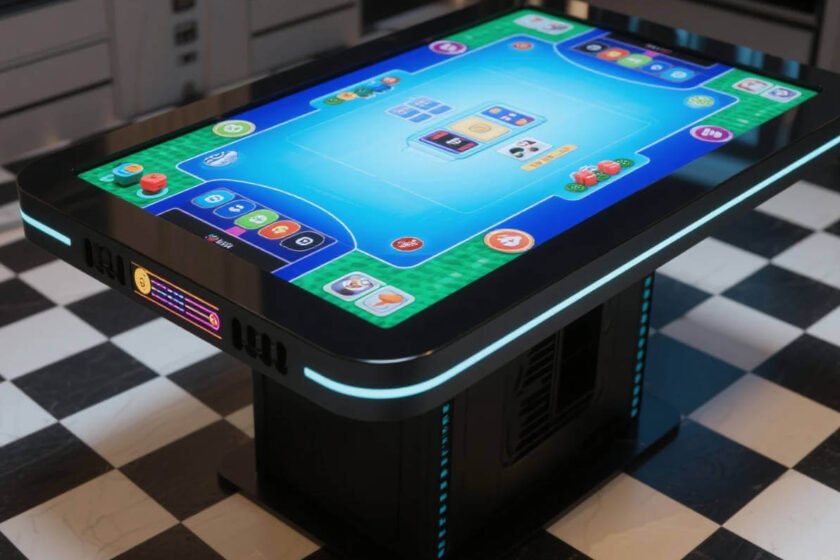
The landscape of modern advertising is shifting from passive observation to active participation. For years, digital signage was defined by screens mounted high on walls, broadcasting one-way messages to a passing audience. However, as consumer expectations evolve, the demand for immersion has led to the rise of the touch screen gaming table. This innovative hardware represents a fusion of entertainment and utility, transforming public spaces into interactive hubs. By bringing content down to the horizontal plane, businesses are finding that they can capture attention more effectively than through traditional vertical displays.
When we consider the “why” behind this trend, the answer lies in human psychology. People are naturally drawn to play, and a touch screen gaming table taps into this instinct by offering a low-pressure environment for interaction. Whether it is in a hotel lobby, a retail showroom, or a corporate breakroom, these tables serve as a magnet for foot traffic. They don’t just display information; they invite the user to touch, swipe, and explore, creating a memorable brand experience that lingers long after the user walks away.
The Evolution of Interactive Hardware in Commercial Spaces
The journey from static posters to high-definition interactive surfaces has been remarkably swift. In the early days of digital signage, interactivity was a luxury reserved for high-end museums or specialized tech labs. Today, the touch screen gaming table has become a versatile tool accessible to various industries. This shift has been driven by the maturation of Projected Capacitive (PCAP) touch technology, which allows for the same smooth, responsive experience users expect from their smartphones, but on a much larger scale.
Why Horizontal Displays Change Customer Behavior
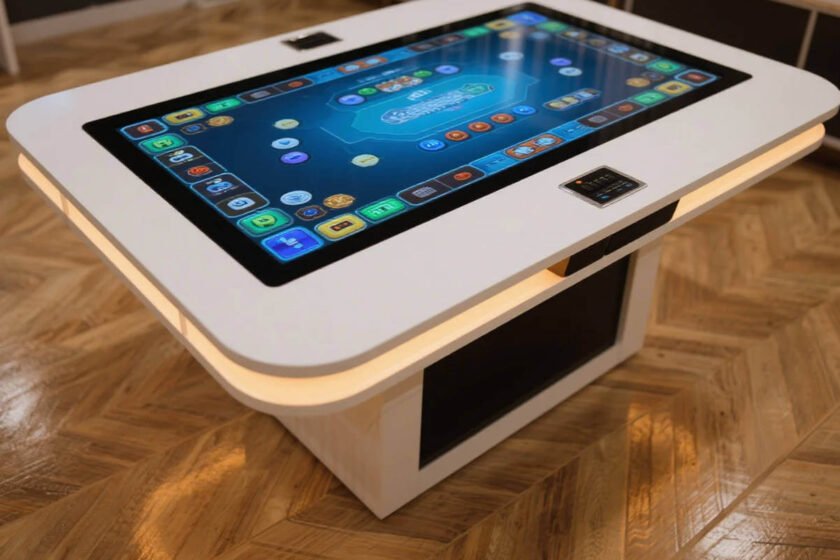
Unlike wall-mounted screens that can feel intrusive or easy to ignore, a touch screen gaming table occupies a communal space. It invites group interaction, allowing multiple users to engage with content simultaneously. This collaborative aspect is particularly valuable in digital signage applications where social proof and shared experiences drive brand loyalty. When a group of friends or colleagues gathers around a table to play a branded game or browse a digital catalog, the hardware is no longer just a sign; it becomes a social facilitator.
Technical Superiority of Modern Gaming Surfaces
The reliability of a touch screen gaming table is paramount for commercial success. These devices are typically engineered with industrial-grade components, including 4K resolution panels and toughened, waterproof glass. Because these tables are often placed in high-traffic areas where spills and heavy use are common, the durability of the surface is a critical feature. Modern manufacturers prioritize anti-glare coatings and high-brightness levels to ensure that the content remains visible under the harsh lighting of retail malls or exhibition halls.
Strategic Applications of a Touch Screen Gaming Table for ROI
For a digital signage product user, the ultimate goal is always a return on investment. A touch screen gaming table provides unique opportunities for lead generation and data collection that vertical screens simply cannot match. By integrating “gamified” marketing—such as digital scratch-offs, puzzles, or trivia—businesses can encourage users to enter their contact information in exchange for prizes or discounts. This active engagement yields significantly higher conversion rates compared to QR codes on static signs.
Enhancing the Retail and Hospitality Experience
In the hospitality sector, a touch screen gaming table serves a dual purpose as both furniture and a concierge. Guests can play games while waiting for their table at a restaurant, or they can use the same interface to browse local attractions and book services. This multi-functionality reduces perceived wait times and increases overall customer satisfaction. In retail, these tables can act as “endless aisles,” allowing customers to customize products in 3D or check stock levels at other locations through an intuitive, playful interface.
Corporate Training and Collaborative Environments
Beyond the commercial front, the touch screen gaming table is finding a permanent home in corporate offices. It is used for collaborative brainstorming, where team members can “throw” digital files across the table or interact with complex data visualizations. By turning a routine meeting into a hands-on experience, companies can improve information retention and foster a more creative workplace culture. The hardware bridges the gap between digital efficiency and the physical comfort of a shared table.
Conclusion
As digital signage continues to mature, the focus is clearly moving toward deeper, more meaningful interactions. The touch screen gaming table stands at the forefront of this movement, offering a perfect blend of entertainment, durability, and marketing power. By investing in this technology, businesses are not just buying a screen; they are creating a destination that invites engagement and builds community. Whether the goal is to drive sales, educate a crowd, or simply provide high-end entertainment, these interactive surfaces are proving to be an indispensable asset in the modern digital signage toolkit.
FAQ
Q1 What is the primary benefit of using a touch screen gaming table over a standard touch kiosk?
The primary benefit is the social and collaborative nature of the horizontal orientation. A touch screen gaming table allows multiple people to stand or sit around it at once, fostering group interaction and longer dwell times. Kiosks are generally designed for one person at a time, whereas gaming tables create a communal hub that is more inviting for social play and shared brand experiences.
Q2 Is a touch screen gaming table durable enough for public use in high-traffic areas?
Yes, professional-grade models are designed specifically for the rigors of public environments. A high-quality touch screen gaming table usually features tempered safety glass that is both scratch-resistant and waterproof. This ensures that the hardware can withstand accidental spills, heavy cleaning, and the constant physical contact associated with multi-player gaming or high-volume retail traffic without losing sensitivity.
Q3 How can a business customize the content on a touch screen gaming table?
Most interactive tables run on familiar operating systems like Android or Windows, making them compatible with a wide range of digital signage software. A touch screen gaming table can be customized with branded games, interactive wayfinding maps, or digital product catalogs. Many providers offer “plug-and-play” solutions where content can be updated remotely via the cloud, allowing businesses to change their marketing messages in real-time.