Storefront Window Display: Is Digital Signage the Future of Retail?
The storefront window display has always served as the silent, yet most impactful, salesperson for any retail establishment. Historically, these spaces relied on static elements—mannequins, props, lighting, and printed graphics—to capture attention and entice potential customers inside. However, in the era of digital transformation and shortened attention spans, this traditional approach faces significant limitations in terms of dynamism, update speed, and engagement measurement. The convergence of high-brightness display technology and advanced digital content management systems has fundamentally reshaped this critical retail touchpoint. For modern retailers, visual merchandisers, and digital signage users, understanding how to transition from static windows to dynamic digital displays is no longer optional; it is essential for maintaining competitive relevance. This comprehensive article delves into the technological shift, the critical design considerations, and the proven return on investment (ROI) that solidifies the digital storefront window display as the indispensable future of retail marketing and visual communication.
The Technological Leap: From Static Art to Dynamic Digital Signage
The primary challenge of a traditional storefront window display is its inherent static nature. Once installed, the messaging remains unchanged for weeks or months, quickly losing its novelty and impact. Digital signage addresses this issue directly by introducing dynamic, responsive content.
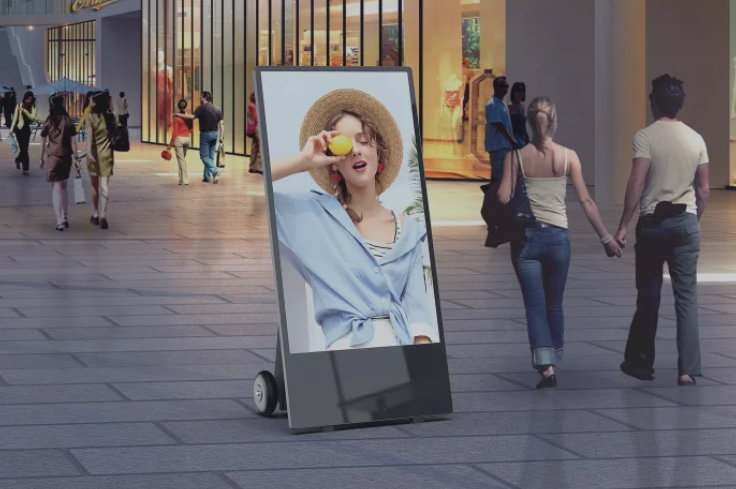
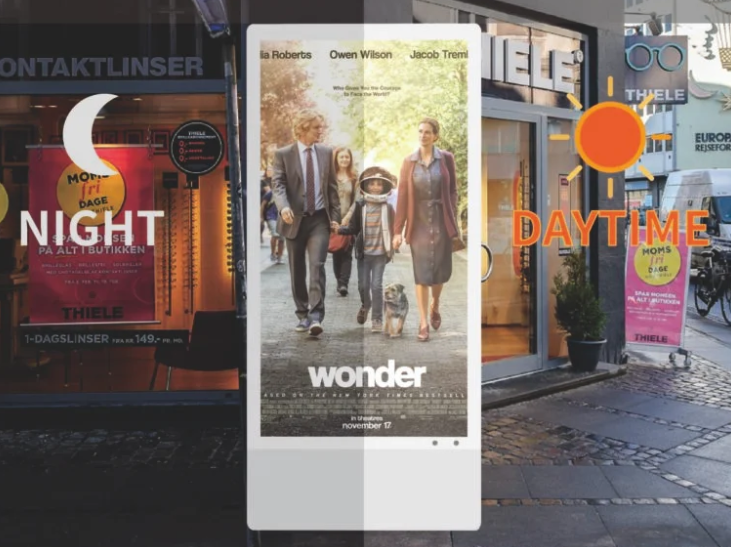
The core technology enabling this transformation is the evolution of high-brightness, sunlight-readable displays. Standard commercial monitors fail dramatically when placed behind glass in direct or strong ambient sunlight, suffering from severe visibility loss and overheating. Modern digital storefront window display screens, however, are specifically engineered to combat these environmental factors. They boast extreme brightness levels, often exceeding 2,500 nits (candelas per square meter), ensuring that content remains vivid and clear even in midday sun. Furthermore, these professional displays incorporate advanced thermal management systems, such as internal cooling and specialized heat-dissipation components, which allow them to operate reliably 24/7 without the risk of screen blackening or premature failure caused by solar heat load. This technological leap allows retailers to showcase high-definition video, real-time promotions, social media feeds, and interactive content, providing a level of engagement and timeliness that traditional paper posters simply cannot match. Consequently, the window shifts from being a mere showcase to an active, always-on communication channel.
Critical Design Factors for High-Impact Window Displays
To successfully leverage a digital storefront window display, visual merchandisers must consider several key design and placement factors that maximize visibility, minimize reflection, and enhance the overall user experience.
One of the most crucial considerations is managing reflections. When a display is placed directly behind glass, the ambient light, particularly from the street or opposite buildings, can cause distracting glare. Retailers mitigate this through specialized display technologies, such as anti-reflective coatings on the glass or the display panel itself, which reduce specular reflection. Placement is equally vital; positioning the screen slightly away from the glass or angling it carefully can often minimize direct light interference. Furthermore, content design must be optimized for the viewing distance and speed of passersby. Highly saturated colors, bold typography, and slow-moving, impactful animations are generally more effective than rapid cuts or complex graphics. The concept of “dual-sided” displays also represents a significant innovation. These screens feature two panels back-to-back—one ultra-bright screen facing the street for external viewing, and a standard-brightness screen facing inward to engage customers already inside the store. This strategic use of hardware maximizes the utility of the window space, making the installation far more efficient.
Measuring Engagement: The Digital Display ROI
One of the most significant advantages of integrating digital technology into the storefront window display is the ability to accurately measure its performance and calculate a tangible return on investment (ROI).
Unlike static displays, where success is only indirectly inferred from foot traffic or sales data, digital signage systems offer sophisticated metrics. Modern solutions integrate hardware that can anonymously detect the presence and dwell time of passersby. Cameras or proximity sensors can track how many people look at the screen, for how long, and even categorize them based on general demographic features. This “proof-of-play” data allows marketers to understand which promotions, videos, or product showcases generate the highest level of external engagement. Furthermore, by coordinating digital window campaigns with in-store promotional codes or mobile application interactions, retailers can directly attribute increased sales to the specific content shown in the window. This data-driven approach allows for rapid content iteration and A/B testing, meaning unsuccessful campaigns can be instantly replaced with higher-performing alternatives. This measurability transforms the storefront window display from a subjective artistic installation into an accountable, performance-driven marketing asset.
Content Management: The Power of Dynamic Scheduling
The ability to schedule and dynamically update content remotely is perhaps the single greatest operational benefit the digital storefront window display offers over traditional methods.
In a multi-location retail environment, updating hundreds of paper posters is a logistical and labor-intensive nightmare, often taking days or weeks to complete. With a networked digital signage system, a content manager can push new seasonal promotions, price changes, or urgent product alerts to every display simultaneously from a central location within seconds. This agility allows retailers to run hyper-relevant campaigns. For instance, a clothing store can schedule light jackets and rain gear to display automatically during unexpected rain showers, or a coffee shop can switch from morning breakfast specials to afternoon happy hour promotions based on the time of day. This dynamic scheduling maximizes the opportunity for context-aware selling, ensuring that the message displayed is always timely, relevant, and compelling to the current demographic passing the window. The efficiency gained in labor and print costs alone often justifies the initial investment in the digital storefront window display hardware, making it a sustainable operational choice.
Integration with Retail Ecosystems and Customer Journey
The future of the digital storefront window display lies in its integration with the broader retail technology ecosystem, creating a cohesive and interactive customer journey.
Advanced digital window displays are no longer passive screens; they are becoming interactive touchpoints. Through technologies like QR codes, Near Field Communication (NFC) tags, and even gesture control, the window display can seamlessly connect the passerby’s mobile phone to the store’s e-commerce platform or loyalty program. A customer interested in a displayed item can instantly scan a code to check inventory, view product details, or even make an online purchase while standing outside the closed store. This capability extends the store’s operational hours and captures sales that might otherwise be lost. Furthermore, the content shown in the storefront window display can be synchronized with in-store digital signage, creating a consistent narrative as the customer moves deeper into the retail space. This complete, integrated loop—from external attraction to in-store experience and point-of-sale—demonstrates the true power of digital signage to unify the customer experience across all physical and digital channels.
Ethics and Responsibility: Ensuring Positive Digital Engagement
While the power of the digital storefront window display is immense, its deployment must adhere to ethical standards and a commitment to responsible, non-intrusive communication, maintaining a positive brand image.
Retailers must use data collection capabilities, such as audience measurement metrics, in strict compliance with privacy regulations (like GDPR or CCPA). The data collected should be aggregated and anonymized, focusing on broad audience behavior patterns rather than identifying individuals. Furthermore, the content itself must maintain a positive and inclusive tone. The use of high-brightness screens demands responsible calibration; while maximum brightness is necessary for sunlit operation, night mode or adaptive dimming should be utilized during darker hours to prevent light pollution or excessive glare that could disrupt the surrounding environment. By focusing on providing valuable, timely information rather than overly aggressive sales tactics, the digital storefront window display serves the community positively and reinforces the brand’s reputation for ethical engagement. This careful balance ensures long-term customer trust and brand loyalty.
Frequently Asked Questions (FAQ)
Q1: Why do standard TVs fail when used for storefront window display?
Standard consumer TVs lack the necessary high brightness (often less than 500 nits) to be visible in sunlight and do not have the specialized thermal management systems needed to prevent overheating and screen blackening caused by solar heat concentrated behind glass.
Q2: How can digital window displays measure audience engagement?
Digital window displays measure engagement using integrated proximity sensors or cameras that anonymously track the number of passersby, their average dwell time in front of the screen, and the specific content they view, providing actionable performance data.
Q3: What is the main operational benefit of dynamic scheduling for these displays?
The main operational benefit is the ability to rapidly change content remotely and instantly across multiple locations. This allows retailers to quickly deploy time-sensitive promotions, react to weather changes, or update pricing without the high costs and delays of printing and physically installing static posters.