Is Digital Signage for Restaurants Essential for Boosting Sales and Efficiency?
The modern culinary landscape is defined by speed, experience, and visual engagement. In this dynamic environment, restaurants must leverage every tool available to capture customer attention and streamline operations. For businesses ranging from fast-casual chains to high-end dining establishments, investing in digital signage for restaurants is no longer a luxury but a fundamental necessity for competitive survival and growth. This technology transforms static, often outdated, print menus into dynamic, captivating sales tools that communicate information instantly and influence purchasing decisions effectively. For digital display manufacturers, integrators, and, most importantly, restaurant owners, a deep, strategic understanding of how this sophisticated technology integrates into the service ecosystem is crucial. This expert analysis will thoroughly explore the technical, commercial, and operational advantages that solidify the position of digital signage for restaurants as an indispensable component of the modern hospitality business model.
The Evolution of the Menu: From Static Boards to Dynamic Digital Displays
The traditional printed menu board, once a staple of the dining experience, suffers from inherent limitations: high printing costs for changes, slow update cycles, and an inability to visually engage the customer. Digital signage for restaurants effectively solves these problems by providing an instantly adaptable platform for content delivery.
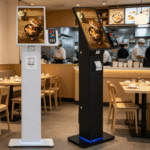
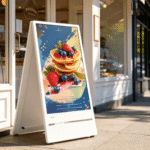
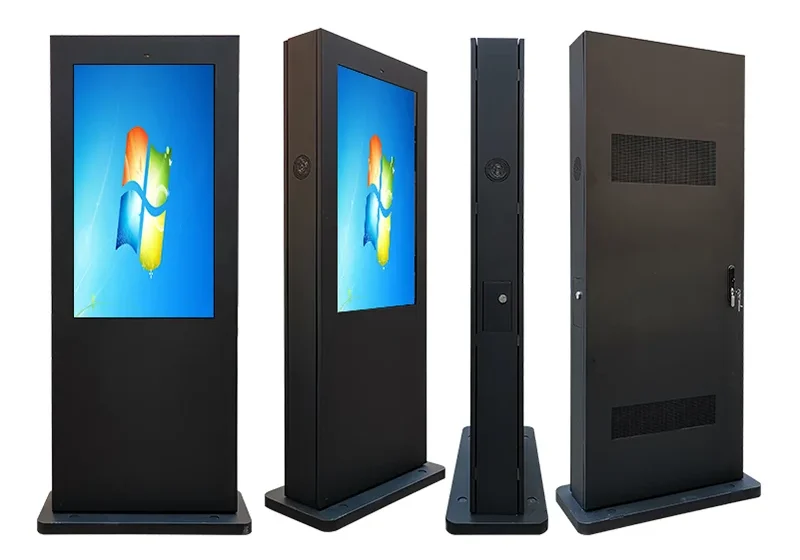
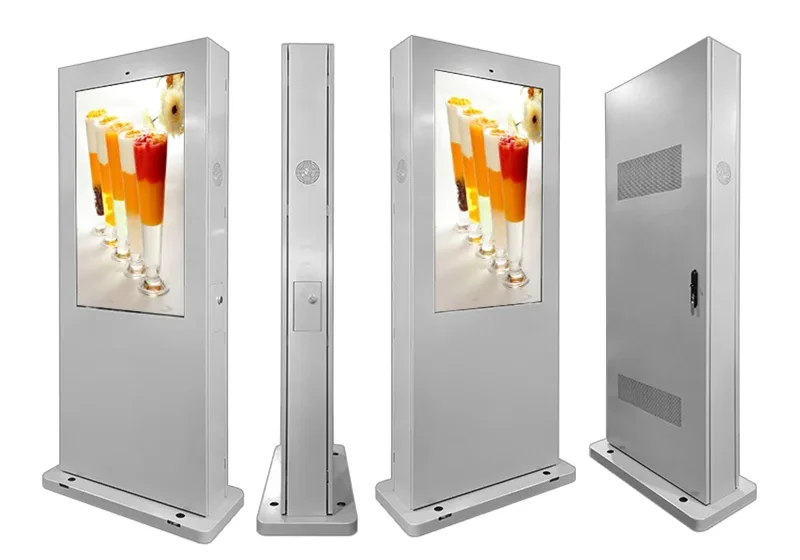
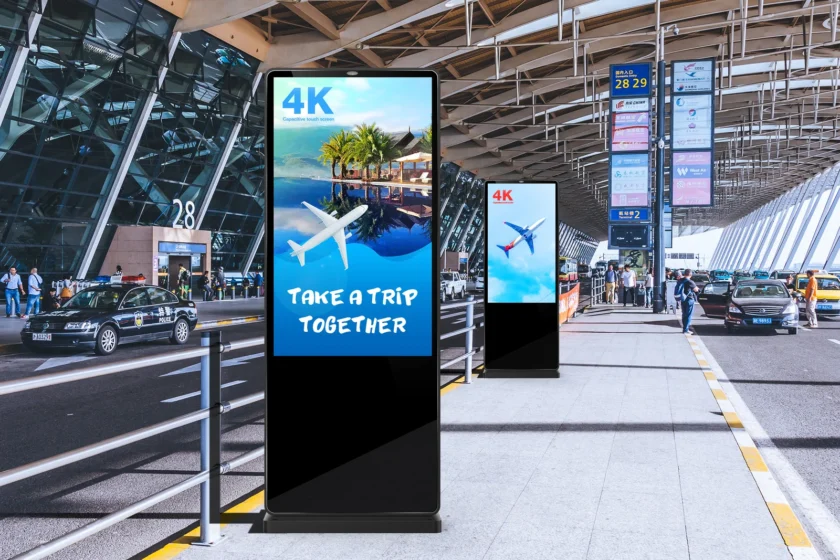
At its core, digital signage comprises rugged, high-brightness commercial displays connected to networked media players, all centrally managed via sophisticated content management system (CMS) software. This technology allows managers to execute real-time price changes, instantly introduce new promotional items, and seamlessly adjust menu boards based on the time of day, aligning offerings with breakfast, lunch, or dinner rushes. This capability drastically reduces the operational friction associated with physical menu management. Furthermore, the ability to utilize high-definition photography and vibrant video loops immediately elevates the perceived value of the food being offered. Strategic placement of these digital displays—whether as primary menu boards, suggestive selling boards near ordering stations, or window displays—ensures that the content directly intercepts the customer at key decision points, maximizing its sales potential.
Driving Revenue: The Influence of Digital Signage for Restaurants on Sales Uplift
One of the most compelling arguments for adopting digital signage for restaurants rests squarely on its proven ability to influence customer behavior and increase average transaction values. This influence is achieved through targeted, dynamic content strategies.
Digital screens effectively promote high-margin items. By prominently featuring visually appealing images of premium specials, seasonal drinks, or bundle deals, the signage employs suggestive selling at a scale and consistency impossible with human staff alone. Studies consistently show that customers exposed to high-quality visual content are more likely to upgrade their orders or select premium-priced items. Moreover, the immediacy of digital content allows for time-sensitive promotions to be implemented. For instance, a coffee shop can instantly deploy a discounted afternoon pastry special during slow periods, effectively managing inventory and driving demand precisely when needed. This responsiveness converts the displays from passive information sources into active, highly effective sales agents. The integration of data analytics further refines this process, enabling restaurant operators to track which menu items are most successful on the digital screens, leading to continuously optimized content and product placement.
Operational Streamlining: Enhacing Efficiency and Reducing Errors
Beyond revenue generation, the efficiency benefits provided by digital signage for restaurants are fundamental to operational success, particularly in fast-paced environments. The technology streamlines several key areas of restaurant management.
First, accurate and instant communication is ensured. When a kitchen runs out of a specific ingredient or a price needs to be adjusted due to supply chain changes, the digital menu can be updated instantaneously across all locations from a single control point. This eliminates the staff time previously spent printing, posting, and manually replacing static materials. Secondly, order accuracy is improved. Clear, dynamic displays reduce ambiguity regarding product descriptions and pricing, which minimizes confusion at the point of sale and decreases order errors—a critical factor in maintaining customer satisfaction and speed of service. Furthermore, digital displays can be leveraged for internal communications, displaying shift schedules, training videos, or real-time performance metrics to kitchen staff, utilizing the same display infrastructure. This multi-functional utility showcases the profound operational value embedded within a well-integrated digital signage for restaurants solution.
Technical and Environmental Considerations for Deployment
Successfully deploying digital signage for restaurants requires careful consideration of the technical environment, as restaurant spaces present unique challenges. Displays must be specified to withstand varying conditions, including humidity, grease exposure, and heat, particularly near kitchen or food prep areas.
Commercial-grade digital displays are engineered with robust housings and often feature higher IP ratings than consumer televisions, ensuring longevity and reliability in harsh commercial settings. Brightness levels are equally critical; screens positioned near windows or in brightly lit lobbies require high-nits displays to maintain readability and impact under direct sunlight. From an installation standpoint, efficient cable management, reliable network connectivity (often utilizing industrial-grade Wi-Fi or wired Ethernet), and secure mounting hardware are essential for safety and maintenance. The content management system (CMS) must also be user-friendly, allowing non-technical restaurant staff to schedule, upload, and deploy content easily. Selecting the right hardware and software ensures that the digital signage for restaurants system operates reliably 24/7, maximizing its value and minimizing frustrating downtime.
Conclusion: A Strategic Platform for Future Growth
In conclusion, digital signage for restaurants is unequivocally essential for modern food service operations, serving as a powerful, multi-functional platform. It transitions the business from slow, costly paper processes to dynamic, real-time visual communication, fundamentally improving both the customer experience and the restaurant’s bottom line. By strategically leveraging the technology’s ability to drive sales of high-margin items, streamline operational updates, and provide resilient communication, restaurant operators gain a significant competitive advantage. The decision to implement this technology represents a commitment to efficiency, customer engagement, and a scalable growth strategy in the rapidly evolving hospitality industry.
Frequently Asked Questions (FAQ)
Q: What is the main difference between a consumer TV and commercial digital signage for restaurants?
A: Commercial digital signage displays are engineered for 24/7 operation, feature high brightness (to combat ambient light), have superior ventilation and heat management, and often come with commercial warranties that cover continuous use, unlike standard consumer TVs.
Q: How quickly can a menu item or price be updated using digital signage for restaurants?
A: Using a cloud-based Content Management System (CMS), menu items or prices can typically be updated and pushed live to all networked digital screens across multiple locations almost instantaneously—often within seconds—providing extreme operational agility.
Q: Can digital signage for restaurants be used for languages other than English?
A: Yes. The flexibility of digital signage allows for easy display of menus in multiple languages. Many restaurants use the system to rotate between primary and secondary languages, or to display specialized menus based on the time of day or customer demographics.